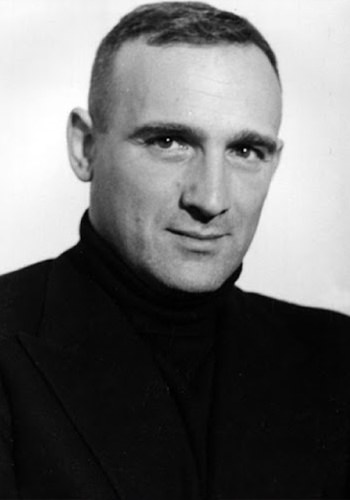
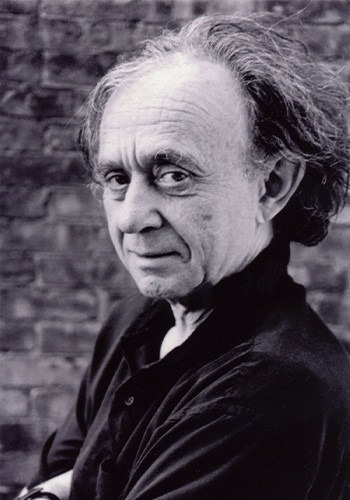
Frederick Wiseman was born on January 1, 1930 in Boston (Massachusetts, USA). After studying art at Williams College and law at Yale Law School, he was appointed Professor of Law at Boston University in 1956 and at Harvard University in 1959. Despite this brilliant career, Wiseman quickly turned away from his academic career and produced his first film in 1963: The Cool Worlddirected by Shirley Clarke. This first experience encouraged him to make his own films: in 1967, he directed his first documentary, Titicut Follieswhich examined the functions of a psychiatric asylum for
criminals, and already sketched out the critical approach to American institutions that would often characterize Wiseman’s work.
From then on, documentary filmmakers made an average of one film a year. These were almost exclusively documentaries, often very long, with no narrator or any other form of intervention by the director in what he was filming. Most of his work was financed and broadcast by the American Public Broadcasting Service, or by private foundations such as the Ford or MacArthur Foundations.
In 1968, he directed High Schoolthen won an Emmy Award for Law and Order in 1969 and two more for Hospital in 1970, about the difficulties facing New York’s Metropolitan Hospital. In 1971, he founded a distribution company, Zipporah Films, with which he produced Welfarewhich he directed in 1975, questioning the viability and inadequacies of the U.S. health and welfare system.
In the 1980s, Wiseman continued to produce documentaries that did not hesitate to expose the dysfunctions of American industries and public authorities. He plunged into the world of American fashion with Model in 1981, and the military in Missile in 1988. He further enriched his body of work with Central Park (1990), which depicts New York’s famous urban park as a complex socio-economic space concentrating very specific institutional and political practices.
In 1995, he devoted a feature-length film to dance, filming the American Ballet Theatre in Ballet. In 2002, Wiseman directed a feature-length fiction film for the first time, but he never followed this path again, as the years 2000 and 2010 saw the consecration and recognition of his documentary films: Domestic Violence (2001) was selected and premiered at the 58th Venice Biennale, La Danse, le ballet l’Opéra de Paris (2009), produced in France, was selected in the Horizons section of the Venice Film Festival and nominated for the César for best documentary film, and Boxing
Gym (2011) was presented in a special screening at the Directors’ Fortnight at the 2010 Cannes Film Festival and at the Toronto International Film Festival (TIFF).
In 2014, his documentary National Galleryabout the famous London museum, was also presented at the Directors’ Fortnight and TIFF, as well as at the New York Film Festival. A year later, Wiseman directed and produced In Jackson Heightsa critically acclaimed feature film about the inhabitants of New York City’s eponymous Jackson Heights neighborhood, which was selected for numerous festivals, including the Venice Film Festival and the Chicago International Film Festival, and won the New York Film Critics Circle Award for Best Non-Fiction Film. The American documentary filmmaker receives his first prize at the Venice Biennale in 2017, for Ex Libris: The New York Public Library which won the FIPRESCI prize. For this film, Wiseman also received the Critics’ Choice Documentary Award for Best Director.
In 2020, Wiseman made an explicitly political film with City Hall which explores the inner workings of Boston government. The film is
presented at TIFF, the Venice Biennale and the New York Film Festival, and tops Cahiers du Cinéma’s annual ranking for 2020. He then directed his second feature film, Un couple (2022), a French-language Franco-American feature film that tells the story of Leo Tolstoy’s wife, played by Nathalie Boutefeu, who co-wrote the screenplay.
His latest film, the documentary Menus-Plaisirs – Les Troisgrosselected at the Venice, Toronto, Busan, New York, Tokyo and Sydney Film Festivals, made in 2023, documents the daily life of a French restaurant: Les Bois sans feuilles. The film won the Best Non-Fiction Film Award at the New York Film Critics Circle Awards, the Los Angeles Film Critics Association Awards and the National Society of Film Critics Awards.
Frederick Wiseman officially announced his retirement in 2025 and passed away on February 16, 2026. He leaves behind an immense filmography, with political overtones, that sparkles with truth.



 2009 – La Danse, le ballet de l’Opéra de Paris Role : Director