21e édition : Du 30 mars au 13 avril 2026

2026

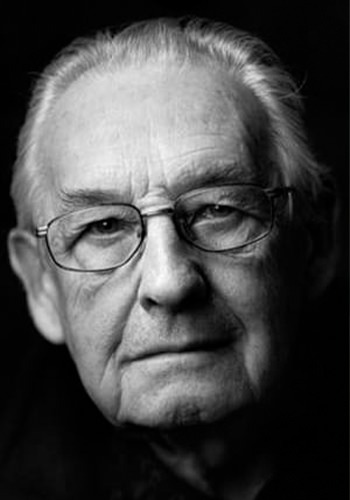
Andrzej Wajda

Andrzej Wajda is a Polish film director, theater director, and screenwriter born in 1926 in Suwałki. The son of an officer and a schoolteacher, he joined the Polish resistance at the age of 16 in 1942 to fight against the Soviets. At the end of the war, he studied at the Academy of Fine Arts in Krakow, then at the National Film School in Łódź. After directing several short films, Aleksander Ford took him on as his assistant for his 1954 film The Five from Barska Street. That same year, he directed his first feature film, Generation. He made his mark at Cannes with his second film, Canal, released in 1957, which won the Jury Prize that year. With films such as The Birch Wood in 1970, The Wedding in 1973, The Promised Land in 1974, and The Maids of Wilko in 1979, Wajda established himself as an adapter of Polish literary masterpieces. Beyond his adaptations of Polish masterpieces, Wajda is one of the most important filmmakers in Polish cinema. Rejecting the codes of Soviet propaganda and socialist realism, he did not hesitate to criticize communist ideas and their excesses through a baroque and electric style of filmmaking that emphasized self-sacrifice, self-giving, and great progressive or humanist causes. His repeated statements against martial law in Poland and his harsh criticism of the policies of the government in power prompted him to film abroad to avoid censorship in his own country. In France, he shot one of his greatest historical films, Danton, in 1983, which served as a metaphorical canvas for his criticism of Poland under martial law at the time. The film won the César Award for Best Director in 1983 and multiple awards at several festivals. He also directed Les Possédés in 1988, an adaptation of Dostoyevsky's book, which allowed him to work with Isabelle Huppert and Lambert Wilson. With his 2007 film Katyń, he revisited this great massacre in Polish history, breaking the silence on the subject to question the legacy of communism in Poland. His last film, The blue flowers in 2016, is a biography of Władysław Strzemiński, an avant-garde painter who fought against Stalinist power. He died on October 9, 2016, in Warsaw at the age of 90.

2026-03-21T16:12:51+01:0021 Mar 2026|

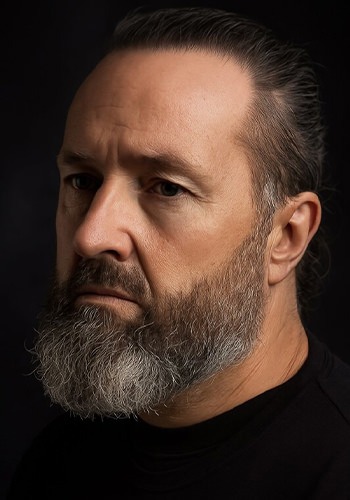
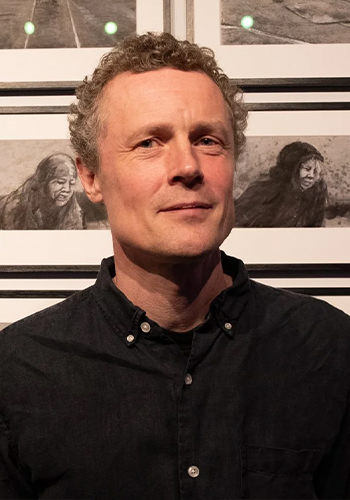
Knutte Wester

A 2003 graduate of the Fine Arts Academies in Umeå and Johannesburg, Knutte Wester (b. 1977) bridges the worlds of contemporary art and cinema. His work is exhibited in international institutions such as the Moderna Museet in Stockholm, KASA gallery in Istanbul or The showroom in London. In 2024, a retrospective titled A City Without a Name, presented at the Film Gallery of the L’Europe autour de l’Europe festival.On the festival circuit, Wester has gained significant acclaim, notably at IDFA in 2016 for A Bastard Child and DOC NYC in 2021 for You Can’t Show My Face, alongside a Best Swedish Short win for Dawn in a City Without Name at the 2014 Tempo Festival.

2026-03-21T15:43:51+01:0021 Mar 2026|

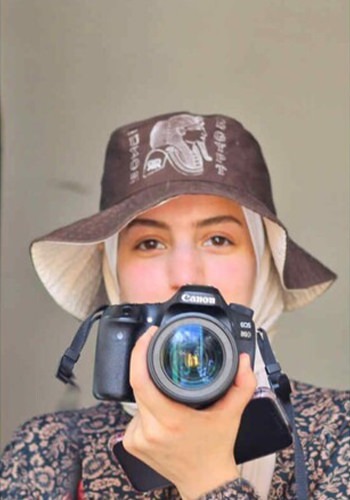
Maria Charbel Mhawej

Maria Mhawej, born in 2005 in Lebanon, is a young film student at the University of Arts and Architecture in Beirut. Her first film, September, was selected at the Beirut Short Film Festival in 2024. With her second film When I go to sleep, she explores the conflict between the carefree nature of childhood and the violence of reality.

2026-03-21T15:28:11+01:0021 Mar 2026|

Angelo Vapellari

Trained as a psychoanalyst, Angelo Vapellari is a French film director. The Silence of the World, his first short film, wich was self-produced, earned Alexandre Kalourguine the Best Actor Award at the Montpellier Independant Film Festival and was selected for the Avignon International Film Festival.

2026-03-20T16:34:54+01:0020 Mar 2026|

Nilram Ranjbar

At just 12 years old, Nilram Ranjbar is the director of three animated short films. Her previous film Cat and Fish was projected in international film festivals such as the Pápa International Historical Film Festival (Hungaria) and Sustain Film Festival (England). With her third and latest movie Immigrant, the young Iranian director showcases a great technical and stylistic evolution.

2026-03-21T14:16:39+01:0020 Mar 2026|

Vida Guzmić

Vida Guzmić is a Croatian artist, born in Zagreb in 1986. She earned a Master of Arts in New Media from the Academy of Fine Arts at the University of Zagreb in 2012, and a degree in Gender Studies from the Center for Women’s Studies in Zagreb in 2013. Her work has been exhibited at V2_ Lab for the Unstable Media in Rotterdam and at KulturKontakt Austria in Vienna. As a member of the collective Space is Tactics between 2012 and 2018, she organized audio/video workshops for young women through Studio Pangolin. Detours, produced by the same studio, is selected for the Slow Film Festival in London in 2025.

2026-03-20T16:06:38+01:0020 Mar 2026|

Samar Taher Lulu

Samar Taher Lulu is a young director born in Gaza, Palestine. She made her first documentary in 2019, Religious Tolerance. She went on to win two awards in 2023 and 2025 at the ConnectHer festival with Jawaher and Khalil HanaaI. Through her documentaries, she seeks to highlight the voices of the oppressed and give them an international platform.

2026-03-20T15:50:27+01:0019 Mar 2026|
Go to Top